



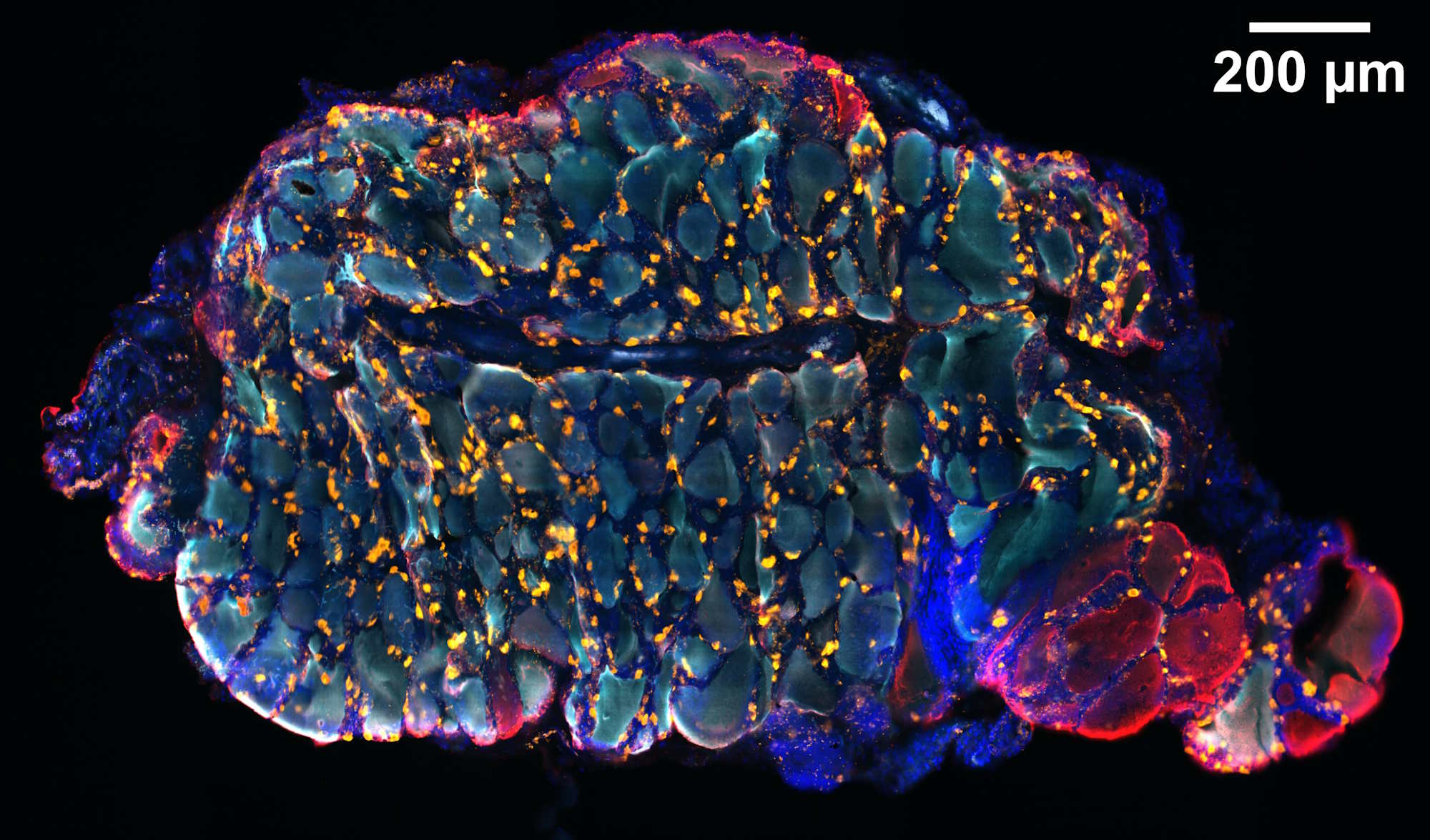
Stephan Roth, Colin J R Sheppard, Rainer Heintzmann | Optics Letters Vol. 41, Issue 9, pp. 2109-2112 (2016)
Summary
A fundamental physical principle states that light concentration is limited because étendue—the product of area and solid angle—cannot decrease within an optical system.
In microscopy, many superresolution methods have been developed to overcome the traditional resolution limit. In this study, the authors proposed and experimentally demonstrated that the conventional limit of light concentration can also be surpassed.
They noted that many superresolution techniques are less photon-efficient than standard widefield microscopy, often because signal from the outer regions of the point spread function (PSF) is discarded.
In contrast, the study showed that reassignment-based methods—including image scanning microscopy, optical photon reassignment, re-scan confocal microscopy, and instant structured illumination microscopy—preserve and reassign all detected photons within the superresolved image.
This results in a higher detected signal per sample area compared with widefield microscopy. The authors described this effect as superconcentration, as it exceeds the classical limit of light concentration.
Read the publication: https://pubmed.ncbi.nlm.nih.gov/27128086