



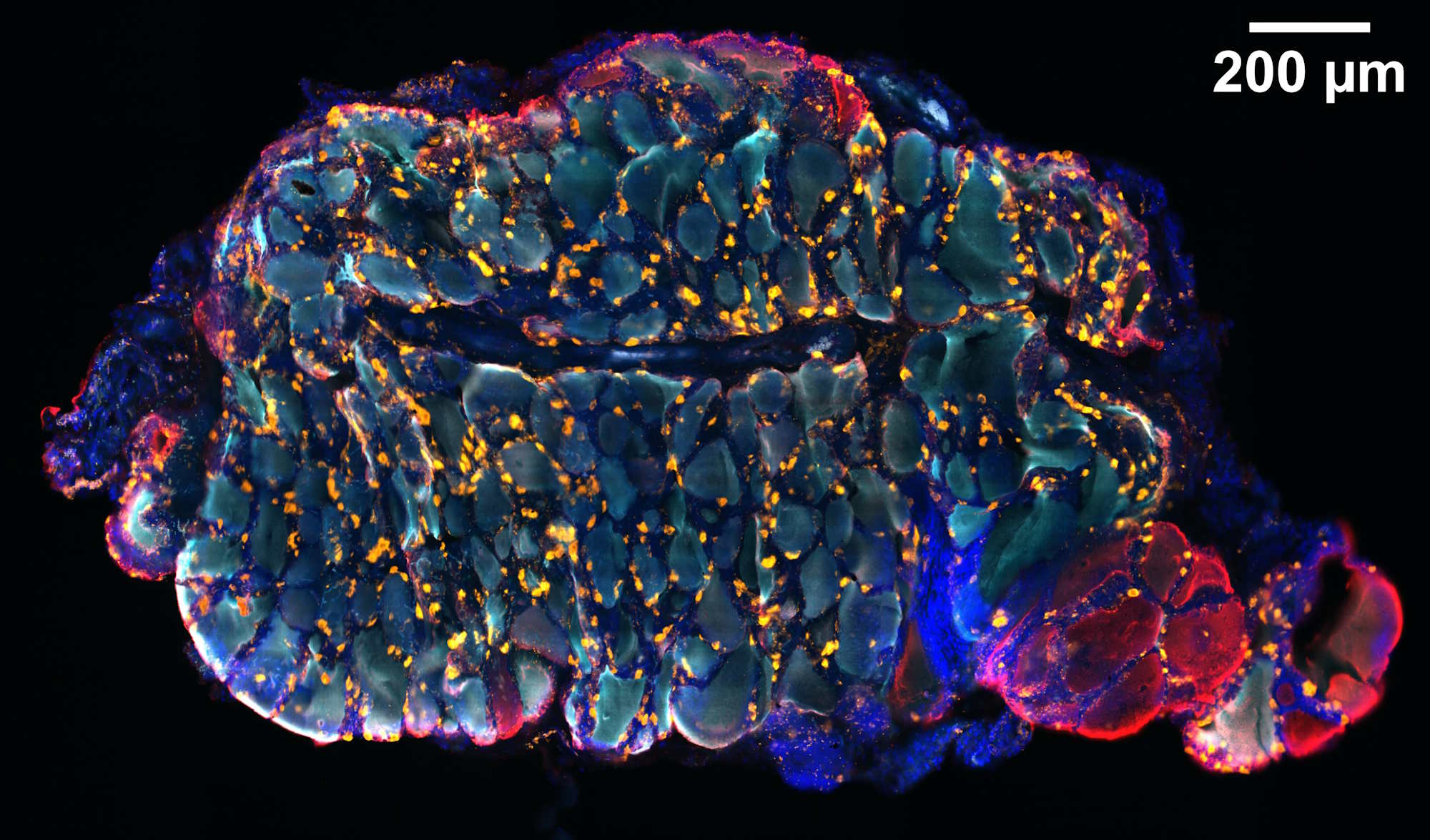
Wei-Ting Lu, Lykourgos-Panagiotis Zalmas, Chris Bailey, James R. M. Black, Carlos Martinez-Ruiz, Oriol Pich, Francisco Gimeno-Valiente, Ieva Usaite, Alastair Magness, Kerstin Thol, Thomas A. Webber, Ming Jiang, Rebecca E. Saunders, Yun-Hsin Liu, Dhruva Biswas, Esther O. Ige, Birgit Aerne, Eva Grönroos, Subramanian Venkatesan, Georgia Stavrou, Takahiro Karasaki, Maise Al Bakir, Matthew Renshaw, Hang Xu, Deborah Schneider-Luftman, Natasha Sharma, Laura Tovini, TRACERx Consortium, Mariam Jamal-Hanjani, Sarah E. McClelland, Kevin Litchfield, Nicolai J. Birkbak, Michael Howell, Nicolas Tapon, Kasper Fugger, Nicholas McGranahan, Jiri Bartek, Nnennaya Kanu & Charles Swanton | Nat Cell Biol ISSN 1476-4679 (online) ISSN 1465-7392 (print)
Summary
Chromosomal instability (CIN) is common in solid tumours and contributes to tumour evolution, greater heterogeneity, and poorer outcomes. In this study, the authors analyzed the TRACERx non-small-cell lung cancer (NSCLC) cohort and identified alterations in six genes, including FAT1, associated with homologous recombination (HR) repair deficiency and CIN.
They found that FAT1 alterations are selected before genome doubling and linked to impaired HR repair. Loss of FAT1 caused replication stress, mitotic failure, nuclear deformation, and increased structural CIN, including chromosome translocations and radial chromosomes.
The study also showed that FAT1 loss promotes whole-genome doubling through dysregulation of YAP1 signaling. Reducing YAP1 activity partially restored numerical chromosomal stability but did not correct HR defects or structural CIN.
Overall, the findings indicate that FAT1 loss in NSCLC increases tumour heterogeneity by weakening HR repair and driving CIN through two distinct mechanisms.
Read the publication: https://www.nature.com/articles/s41556-024-01558-w